Tilt: Cash Advance & Credit
- 306.12K
- 4.6
- Installs
- 5.00M
- Price
- Free

Screenshots



Analysis by Reviewed APKs
Tilt: Cash Advance & Credit is a finance app for people looking to explore cash advances, credit options, credit-score monitoring, and savings tools in one place. I like that it considers income and spending alongside credit scores, while still making clear that offers depend on eligibility. It may suit someone comparing short-term options, but the fees, repayment terms, and subscription details deserve a careful read before signing up.
A Cushion for a Tight Week
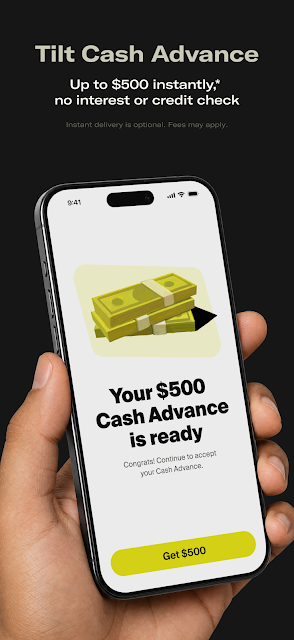
When an unexpected expense lands between paydays, I can see why an app like Tilt would catch someone’s eye. Its Cash Advance option offers eligible users between $10 and $500, and the app says offers can increase with on-time payments. I’d start by checking what I’m eligible for and what delivery would cost, rather than treating an advance as money that is automatically available.
The appeal is having several possible routes in one app: a cash advance, a line of credit, or a credit card, depending on eligibility. Tilt says it looks at real-time income and spending as well as credit scores. That framing may help people who feel a score alone misses important context, though it does not mean everyone will qualify or that a particular offer will fit their budget.
Not a General Budgeting App
I’d compare Tilt with a bank or lender when I’m weighing ways to access credit, and with a credit-monitoring app when I mainly want to follow my score. Tilt brings borrowing options together with score monitoring and AutoSave, so it has a broader mix than a single-purpose advance app. The trade-off is that its central focus is still access to cash and credit, not a complete picture of every part of someone’s finances.
This is not a replacement for a checking account or a general-purpose budgeting system. The description does not present it as a place to manage everyday bills or track spending across a full household budget. It is better understood as a set of financial products and supporting tools, with approval and terms varying by product. I’d read the product-specific details before deciding whether any option beats alternatives I already have.
A Few Useful Habits
I’d make checking the terms part of the routine, especially before requesting an advance. Tilt says instant delivery is optional and fees may apply, so I’d compare that choice with the available alternative and note the repayment date. For the line of credit, I’d keep the due date visible and understand that payment history is reported to credit bureaus. Those small checks matter more than chasing a higher limit.
The app’s Credit Score Monitoring and personalized tips may be more useful when I revisit them regularly rather than only when I need to borrow. AutoSave is another option: users can set a goal by week or pay period, and Tilt says it moves money aside when the budget allows. I’d set a modest target and check how it fits my actual cash flow before relying on it.
More From Our News Desk

Zoom Meetings, Google Meet, or Teams: Which Is Easiest to Join?

How I Build a Free Streaming Lineup With Tubi

Why Crunchyroll Is the Default Anime App for So Many Fans

YouTube TV: A Practical Guide to Cutting Cable

Rummikub and the Small Comfort of Phone Games

TeamViewer Remote Control or AnyDesk for Helping Family?
Who May Find Tilt Useful
I’d suggest Tilt to adults who want to check their eligibility for a cash advance, credit card, or line of credit and are comfortable reviewing the terms of each product. Its mix of credit-score monitoring and savings goals may also appeal to someone who wants a few related tools together. The app’s approach of considering income and spending alongside credit scores is a distinctive starting point, not a promise of approval.
It may be a poor fit for someone who wants a free, uncomplicated budgeting app or who cannot comfortably handle a repayment obligation. I’d also be cautious if a recurring subscription would be unwelcome: Tilt’s description says first-time customers get a 14-day trial followed by an $8 monthly subscription, with the trial and fee not applying to Tilt Credit Cards. Product terms and eligibility are worth checking before enrolling.
Tilt: Cash Advance & Credit is made by Tilt Finance. On Google Play, it has over 5 million installs and a 4.6-star rating from about 306,000 ratings. The app is free to download, is marked as containing no ads, and has an Everyone content rating. Its listed version is 7.76.0.864.
The Google Play details give a release date of December 4, 2017, and a last update date of November 3, 2026. The Android version requirement is not included in the supplied app facts, so check the Google Play page on your device for compatibility. The description separately explains a subscription for first-time customers; the terms for that are worth reviewing before enrollment.
How Tilt Fits Into Everyday Money Decisions
A Quick First Look
When I first opened Tilt, the range of options stood out: cash advance, credit card, line of credit, score monitoring, and savings. That is a lot of ground for one finance app, so I’d begin with the option I actually want rather than treating every feature as equally relevant. Tilt says a customer can have only one of its cash advance, credit card, or line of credit products at a time.
Before applying, I’d take a moment to understand the distinction between the products and what information each decision may involve. Tilt describes its approach as considering real-time income and spending, not only a credit score. Its description also says some products are subject to approval. A careful first pass through the terms is a sensible part of getting set up, not an optional afterthought.
The Day-to-Day Experience
In everyday use, Tilt seems most relevant at a decision point: checking whether an offer is available, monitoring a credit score, or setting a savings goal. I wouldn’t expect it to replace the routine of checking my bank balance or planning bills. Instead, I’d use it when I want to understand one of the options Tilt provides and then return to the details when repayment or savings decisions come up.
The app describes cash advances of $10 to $500 for eligible users, with optional instant delivery that may involve fees. That distinction is practical: “available” and “delivered instantly” are not necessarily the same thing. I’d confirm the amount, delivery choice, and repayment terms shown to me before proceeding, and avoid making plans around an offer until I know exactly what is available.
Tools Beyond Borrowing
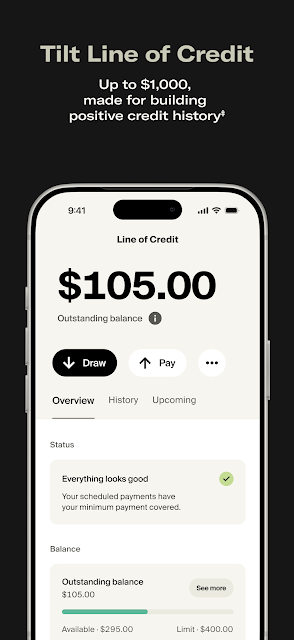
Credit Score Monitoring gives users a way to track their score in the app, alongside personalized tips intended to help it grow. That can be handy if I want a reason to check in between applications. The line of credit is described as a product for building positive credit history, with payments reported to credit bureaus. Late or missed payments can have negative consequences, so I would treat the repayment terms as central.
AutoSave adds a different kind of tool. Users can choose a savings goal by week or pay period, and Tilt says it will set money aside when the budget allows. The description explains that signing up for Automatic Savings requires opening a deposit account in the user’s name through nbkc bank. That makes it worth reading the account and insurance details as well as deciding whether an automatic transfer suits my finances.
The credit card is another route, but it has its own application path: Tilt says users can apply on tilt.com. It is issued by WebBank, and the description says pre-qualification has no impact on a credit score and does not require credit history. I’d keep that separate from the app’s advance and line-of-credit options, since each has distinct eligibility and terms.
A Practical Check-In Routine
A sensible routine would be to open Tilt when I have a specific question, not whenever I feel short on cash. I might check score monitoring and its tips, review whether a product is relevant, and compare the stated costs and repayment requirements with my budget. If I use AutoSave, I’d choose a goal that feels manageable and check how the transfers work rather than assuming the app can predict every expense.
For an advance, I’d verify the offered amount and delivery timing before counting on it for a bill. Tilt says instant delivery is optional and fees may apply, while not every applicant qualifies. For a line of credit, I’d keep track of the minimum payment and due date, since Tilt says payments are reported to credit bureaus. Those steps keep the app’s options in context instead of letting a tempting number drive the decision.
Costs and Eligibility Matter
The main limitation is that access is conditional. Tilt says not everyone will qualify for a cash advance, and the line of credit is subject to credit approval. Limits and offers can vary, and some delivery choices may carry fees. A description of a maximum amount is not the same as an amount a particular user will receive, so I would base a decision on the offer and terms shown to me.
The subscription is another detail to understand. Tilt’s description says first-time customers receive a 14-day trial followed by an automatically recurring $8 monthly fee, and says this does not apply to Tilt Credit Cards. Because that is a recurring charge, I’d check the enrollment screen and cancellation terms before starting. The app can be useful to explore, but it is not a substitute for comparing costs with other options.
Tilt also says customers are limited to one of its cash advance, credit card, or line of credit products at a time. That makes the choice between them more consequential than simply trying every option. I’d compare the purpose, repayment obligations, and possible fees for the product I’m considering, and make sure the overall arrangement works for me before accepting.
Tilt brings together several ways to explore cash and credit, plus score monitoring and a savings feature. I like the range and the attention to income and spending, but eligibility, fees, repayment duties, and the subscription deserve a close look. I’d treat it as a place to compare specific options, not a quick fix for every cash-flow problem.
I’d recommend Tilt to people who want to check its credit or advance options and are prepared to read the terms carefully. It may not suit someone seeking a straightforward budget tracker or an app without recurring costs. Before enrolling, I’d confirm the current offer, delivery fees, and subscription details in the app or store.
Tilt Frequently Asked Questions
What is Tilt: Cash Advance & Credit used for?
Tilt is a finance app offering eligible users access to a cash advance, a line of credit, or a credit card, along with credit-score monitoring and AutoSave. The description says it considers real-time income and spending as well as credit scores. Availability and terms depend on the product and the user’s eligibility.
Which devices can run Tilt: Cash Advance & Credit?
Tilt: Cash Advance & Credit is available on Android through Google Play. The supplied app details do not give a minimum Android version, so check the Google Play page on your device for the current compatibility requirement. The description also mentions Apple Pay and Google Pay for certain eligible cardholders, but that does not change the app’s listed platform.
What Android version does Tilt: Cash Advance & Credit require?
The minimum Android version is not included in the available app facts. Requirements can vary as an app is updated, so check Tilt: Cash Advance & Credit on Google Play for the current device requirement before installing. The listed app version is 7.76.0.864.
Does Tilt: Cash Advance & Credit cost money?
The app is free to download on Google Play. Tilt’s description says first-time customers receive a 14-day trial followed by an automatically recurring $8 monthly subscription, and that the trial and fee do not apply to Tilt Credit Cards. It also says optional instant delivery may involve fees. Review the current terms in the app or store before proceeding.
Who should consider Tilt: Cash Advance & Credit?
It may suit someone who wants to check eligibility for a cash advance, line of credit, or credit card and use related score-monitoring or savings tools. It may not suit someone who wants only a general budgeting app or is uncomfortable with repayment obligations and possible recurring costs. Offers and product eligibility vary, so review the terms before choosing.
Pros
- Brings cash advances, credit options, score monitoring, and savings goals together.
- Describes an eligibility approach that considers income and spending alongside credit scores.
- Offers personalized credit tips and a savings goal organized by week or pay period.
- Clearly distinguishes optional instant delivery from the advance itself.
Cons
- Product approval and available amounts depend on eligibility.
- Optional instant delivery may involve fees, and the subscription terms need attention.
- Customers can have only one listed borrowing or card product at a time.
- Category
- Finance
- Version
- 7.76.0.864