 About Car Parking Multiplayer
Car Parking Multiplayer: A Calm Start for New Drivers
Start With One Quiet Drive
When I first opened Car Parking Multiplayer, I treated it like a driving game before treating it like a parking test. The game combines driving challenges with a multiplayer open world, so there is plenty to take in. My first useful task was simply to get a feel for moving a car and steering it without worrying about a perfect finish. A quiet practice drive helps you notice how much steering input you need and how quickly the car responds.
Keep the first session deliberately simple. Pick a vehicle and drive at a pace that gives you time to react, rather than trying to cover ground quickly. I found it easier to learn one thing at a time: steer through a broad turn, straighten out, then try another. If the car swings wider than expected, ease off and correct gradually. Small adjustments are easier to manage than a sudden turn when you are already close to an obstacle.
The game includes 82 parking and driving challenges, but there is no need to make the first one a test of everything at once. Use early attempts to learn the feel of the car, then bring that knowledge into a challenge. Car Parking Multiplayer is free on Google Play, where it has a 4.5-star rating and over 100 million installs. Ads and in-app purchases are part of the game, so keep that in mind as you settle in.
Build a Repeatable Control Routine
For a new driver, the most helpful control habit is separating steering from speed. I try to approach a turn or parking space slowly, make the steering adjustment, and then focus on straightening the car. When both hands-on decisions happen at once, it is easy to overcorrect. A slower approach gives you a little room to notice whether the nose is moving where you expect and to make a measured correction before the car reaches the tight part.
Use a short practice loop instead of roaming aimlessly: drive forward, make a gentle turn, straighten, and stop. Then repeat it from another angle. This gives you a basic reference for how the chosen car behaves. If the car ends up crooked, pause and correct in small increments rather than trying to fix the whole angle in one move. That routine is useful in both ordinary driving and the more exact parking tasks.
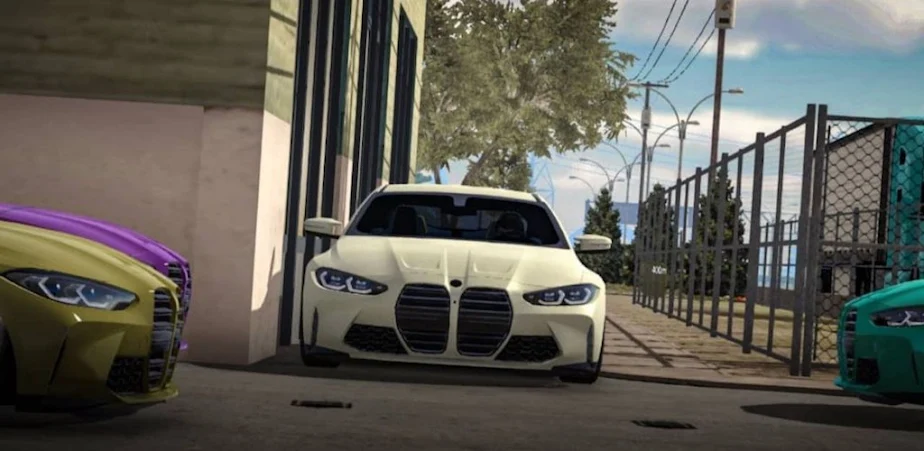
I also avoid changing cars every few minutes while learning. Car Parking Multiplayer has 100 cars, including sports, classic, pickup and truck options, and they will not all feel identical to drive. Sticking with one vehicle for a while makes it easier to recognize your own steering habits. Once the basics feel less surprising, switching to a different type of vehicle becomes a useful challenge rather than an extra source of confusion.
Approach Parking Challenges in Stages
Before trying to park, take a moment to read the space. Notice where the car needs to end up, which direction it should face, and what nearby obstacles leave little room for a correction. I treat the first part of a challenge as a setup: get the car aligned with the space, reduce speed, and avoid turning sharply at the last second. A deliberate approach often matters more than a fast one.
Break the maneuver into small pieces. First, bring the car alongside the space at a manageable angle. Next, turn gradually and watch how the front and rear move in relation to the boundaries. Finally, straighten the car and make small adjustments if needed. This is not a magic formula for every layout, but it gives a new player a calmer way to think through the 82 driving and parking challenges.
If an attempt goes wrong, use it to identify the moment that caused trouble. Did you arrive too quickly, start the turn too late, or keep steering after the car had begun to line up? Change one part of the approach on the next try. I find that repeating the same attempt with one adjustment is more useful than making several different changes at once, because it shows which choice actually helped.
Make Corrections Without Rushing
A common beginner frustration is turning the wheel too far while trying to rescue a parking attempt. When that happens, I stop adding input for a moment and check the car's angle again. If the front is pointing away from the space, a small correction is usually easier to understand than a quick, full steering change. The goal is not to make every move flawless; it is to keep each correction small enough that you can see its effect.
Pay attention to the whole car, not just the front. The rear can swing toward an obstacle while the nose appears to be moving into a good position. In a tight space, make progress in short movements and reassess the angle between them. That patient rhythm is especially helpful when you are still learning how the selected vehicle reacts. If a challenge takes several attempts, that is a reason to slow the next one down, not to rush it.
It can help to separate a driving challenge from a parking challenge in your own mind. A route may ask you to move through an environment, while a parking task rewards careful positioning at the end. I try to save a little attention for the final approach instead of using all my focus on getting there quickly. That simple change makes the finish feel less abrupt and gives you more time to line up before committing to the space.
Explore the Open World at Your Pace
Once the controls feel more familiar, the open world is a good place to practice without focusing only on a marked parking task. The game includes free walking, detailed environments, buildings with interiors, gas stations and car services. I would treat that space as somewhere to look around and get comfortable with the setting, rather than assuming every trip needs to be a race or a challenge.
Try a modest goal for an open-world session: drive to a visible point, take a turn carefully, or explore on foot for a while. The game also includes multiplayer racing, a friend list and voice chat, but new players do not have to use every multiplayer option immediately. Getting used to driving at your own pace first can make the busier parts of the game feel less overwhelming when you decide to try them.
The open world also gives you a chance to notice the range of vehicles and places in the game. There are 16 player skins, real interiors for the 100 cars, and buildings with interiors. Those details make wandering around a different kind of activity from completing a parking task. If your main aim is to improve your driving, keep exploration low-pressure and return to the challenges when you want a more structured task.
Add Multiplayer and Tuning Gradually
Multiplayer can add variety, but I would approach it after learning the basics of steering and parking. The game lets players compete in multiplayer racing and exchange cars with other players, and it includes police mode. Those options offer different ways to spend time in the game, but they can also mean more happening around you than in a solo practice run. Start with the activity that sounds interesting and give yourself time to learn its pace.
Car customization is another feature worth exploring once you know what you want from a vehicle. The available tuning includes suspension and wheel-angle adjustments, along with engine changes such as the engine, turbo, gearbox and exhaust. Visual customization includes dynamic vinyls and body parts. I would make one change at a time and then drive the car, so you can tell how it feels afterward instead of changing several things and guessing which adjustment mattered.
There is no need to turn every session into a shopping or tuning session. The game is free to play, with ads and in-app purchases; Google Play lists in-app items from $0.99 to $69.99. For a new player, the practical priority is learning the driving and challenge flow before deciding whether any optional purchase or customization is relevant. A familiar car and a patient approach are enough to make progress through the core parking tasks.
My best beginner routine is simple: learn one car, practice steering at a calm pace, and approach each parking space in stages. When a maneuver goes wrong, change one part of your approach and try again. That makes the game's 82 challenges feel more manageable without turning each attempt into a race against yourself.
After that, use the open world to explore, then try multiplayer or tuning when you feel ready. Car Parking Multiplayer has plenty of variety, from walking and detailed locations to racing and vehicle customization. You do not need to master all of it at once; give yourself room to learn the controls and enjoy the parts that suit your pace.