WorldBox - Sandbox God Sim
- 817.51K
- 4.6
- Installs
- 50.00M
- Price
- Free
Screenshots
Analysis by Reviewed APKs
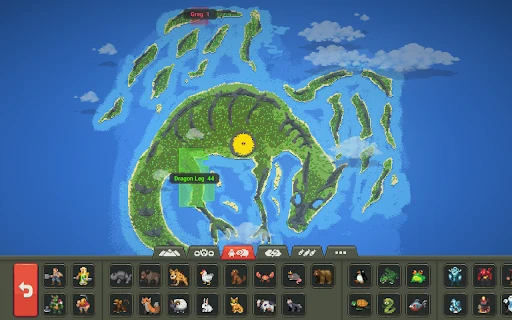
WorldBox - Sandbox God Sim is a pixel-style god game where I can shape a world, introduce creatures and civilizations, then watch their stories unfold—or intervene with disasters and other powers. It suits curious players who enjoy open-ended simulation more than fixed goals. I like how easily a quiet experiment can turn into a lively little history, though the freedom can feel aimless if you want missions or a clear win condition.
A world that keeps changing
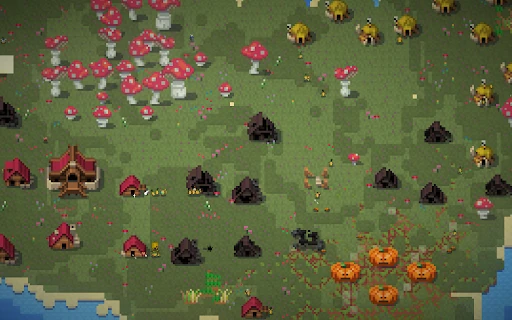
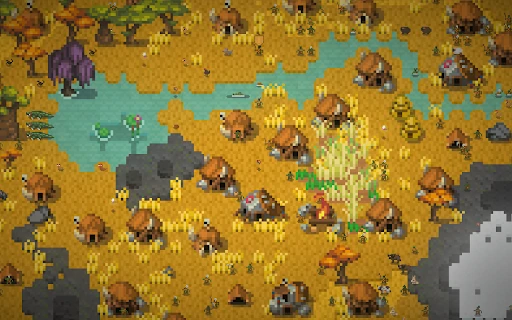
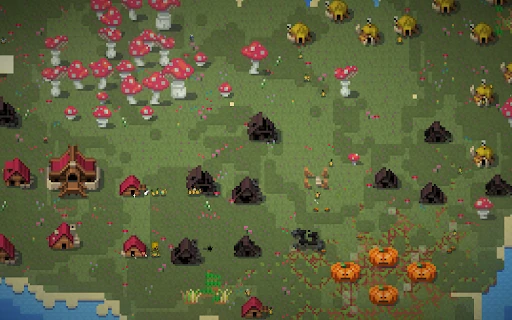
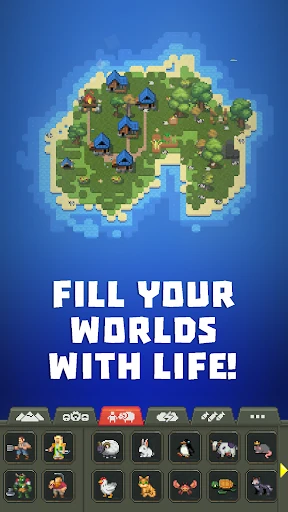
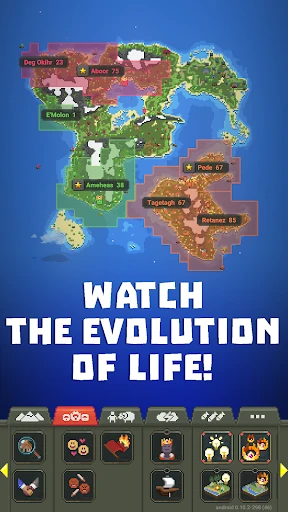
A typical session starts with a blank or developing world and a question: what happens if I add a few creatures here, or give a civilization room to grow? I can populate the map with sheep, wolves, orks, elves, dwarves and other beings, then watch settlements build houses and roads, expand, and sometimes fight. The pleasure is less about issuing a long list of commands and more about setting up a situation and seeing what unfolds.
When I first tried to make sense of the appeal, it was the back-and-forth between creation and observation that clicked. A world can feel peaceful while its inhabitants prosper, but I can also change the conditions with a power or a disaster and see how events shift. A meteorite or tornado can abruptly interrupt a settlement's routine. I enjoyed being able to make a small intervention, then step back and let the simulation carry on.
For curious sandbox players
WorldBox is a good fit if, like me, you enjoy open-ended toys that reward experimentation. It has the broad appeal of a simulation sandbox, but its focus is on making a world and watching life and civilizations evolve, rather than completing a campaign. There is room for both gentle world-building and dramatic destruction, so I can choose whether a session is about nurturing a society or testing what it can survive.
It is not the best match for someone who needs a clear objective, a carefully guided story, or constant direct control over every character. Much of the fun comes from letting events play out after I set them in motion. That can make the game feel quiet or unpredictable, depending on what I have created. If I want a more structured pace, or dislike watching systems develop on their own, this sandbox may not hold me for long.
Start small, then experiment
For the first few hours, I recommend resisting the urge to fill every patch of land at once. Adding a few creatures and giving civilizations space to develop makes it easier to see how their buildings, expansion, and conflicts relate to the world around them. I found that a simple setup gives me a better baseline than changing several things at once. Once I have a feel for the simulation, I can introduce more creatures or powers and compare the results.
Treat the different powers as experiments rather than tools with one right answer. I might let a world develop, then try a disaster or a more dramatic intervention and watch how the balance changes. The pixel-world tools also invite a slower, creative approach: I can use brushes and different pixel types to make art instead of focusing on civilization. There is no need to rush toward a particular outcome; the point is to find a setup I enjoy observing.
More From Our News Desk

Zoom Meetings, Google Meet, or Teams: Which Is Easiest to Join?

How I Build a Free Streaming Lineup With Tubi

Why Crunchyroll Is the Default Anime App for So Many Fans

YouTube TV: A Practical Guide to Cutting Cable
Rummikub and the Small Comfort of Phone Games
TeamViewer Remote Control or AnyDesk for Helping Family?
Who will enjoy this sandbox
I would recommend WorldBox to players who like to make their own goals. If you enjoy creating a setting, introducing life, and checking in to see how a world has changed, there is an easy reason to return for another short session. It also works for players who want to switch between constructive and destructive play. One day I can watch civilizations grow; another time I can see what a sudden disaster does to the map.
Players who prefer tightly directed levels, dependable action, or a steady stream of explicit tasks may bounce off. WorldBox leaves much of the agenda to me, and the simulation's appeal depends on finding its own experiments interesting. It is also a poor fit if I only enjoy building and do not want conflict or disasters in the mix, since those are part of the available sandbox. The best audience is patient, imaginative, and happy to follow an unscripted outcome.
WorldBox - Sandbox God Sim is a free simulation game from Mako Mako. On Google Play it has over 50 million installs and a 4.6-star rating from around 818,000 ratings. It is rated Everyone and requires Android 6.0 or later. The supplied store details give version 0.51.2, released October 10, 2018, with an update dated September 12, 2025.
The game is free to download, with in-app purchases priced from $1.99 to $7.99 per item. It also contains ads. Those details are worth keeping in mind if I plan to spend a lot of time experimenting, though the core idea is easy to try without paying upfront. The game's stated offline play support is useful for sessions away from Wi-Fi or an internet connection.
Building Worlds, Then Letting Go
An open-ended first hour
The opening experience is less like joining a campaign and more like being handed a small creative space. I can create life, shape a pixel world, and decide what to observe. That freedom is appealing, but it also means I have to supply my own first objective. I found it useful to start with one simple idea—such as seeing how a settlement develops—rather than trying to use every creature and power straight away.
The basic premise is straightforward: put things into the world and observe the consequences. Civilizations can build houses and roads, develop, and go to war. Meanwhile, I can alter the setting or add a new force. The first sessions work best when I treat the game as a simulation to explore, not as a puzzle that expects me to discover a single correct sequence.
Progress without a finish line
Progress here is about what happens in the world rather than a conventional run toward a final objective. I can watch populations and settlements change, then decide whether to preserve that development or disrupt it. That makes the pace unusually flexible: I can spend a few minutes checking on a civilization or linger over a longer chain of changes. I like that there is no pressure to make every session look the same.
The same openness can make the game feel slow if I am waiting for a specific event. Civilizations may grow and fight, but the description does not frame this as a set of increasingly difficult stages. I get more out of the pacing when I choose a small experiment and stay curious about its result. If I need clear milestones or escalating challenges to stay engaged, this looser structure may feel thin.
Creatures, powers, and pixel art
The variety of ways to play is a strong part of the appeal. I can introduce different creatures, including sheep, wolves, orks, elves, and dwarves, and watch how life develops alongside civilizations. I can also use powers to change the tone of a world, from letting it prosper to causing destruction with acid rain, a tornado, or an atomic bomb. The appeal is in seeing how those choices affect the little ecosystem I have made.
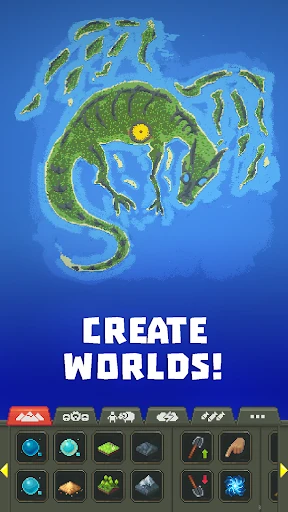
There is more here than civilization watching. I can simulate disasters such as meteorites, volcanoes, lava, tornadoes, and geysers, or play around with Conway's Game of Life and Langton's ant. The pixel-world tools also let me make pixel art with brushes and different pixel types. I appreciate that these activities support different moods: a session can be observational, destructive, or simply focused on creating an image.
I found the range most interesting when I stopped treating every tool as a way to make a civilization succeed. A world can be a place to test a cellular automaton or build pixel art, rather than a stage for one ongoing society. That flexibility gives the sandbox a distinct identity. It also means the experience depends heavily on which parts of the toy box I find satisfying.
Free entry, paid extras
The game is free to download, but it contains ads and offers in-app purchases at $1.99 to $7.99 per item. I would treat that as a practical consideration rather than a reason to avoid trying it: the open-ended premise is easy to understand before deciding whether I want to spend anything. For a player who plans only occasional experiments, the purchase options may matter less than for someone who expects to return often.
I cannot call the experience entirely interruption-free, because ads are part of the store details. The available facts do not explain how often they appear or what each purchase includes, so I would check the Google Play information before buying. Still, the free entry point makes it possible to see whether watching and shaping a world holds my interest before considering an optional purchase.
Keep expectations flexible
The main limitation is the game's open-ended nature. There is no stated campaign or fixed progression path to keep me moving from one goal to the next, so a session can feel directionless if I arrive without an idea. I also need to accept that much of the fun is watching what the simulation does after I intervene. Players who want precise control over every outcome may find that hands-off quality frustrating.
WorldBox supports offline play without Wi-Fi or an internet connection, which makes it convenient for travel or a quiet stretch without connectivity. The practical device requirement is Android 6.0 or later. Beyond that, the supplied details do not give hardware guidance, so I would check the store page for compatibility information that applies to my device. The game's Everyone rating gives a broad age category, but parents can still review its disaster and conflict themes.
WorldBox - Sandbox God Sim is at its best when I treat it as a creative experiment rather than a conventional game with a checklist. Its mix of civilizations, creatures, disasters, and pixel-art tools gives me plenty of ways to make a world feel like my own. The freedom is a real strength, but it also asks me to bring my own curiosity and patience.
I recommend it to players who enjoy observing systems change and making their own goals. If you need a guided story or a steady sequence of challenges, I would look elsewhere. For everyone else, the free download offers a low-commitment way to find out whether this unusual little god-game sandbox suits your kind of play.
WorldBox Frequently Asked Questions
Is WorldBox - Sandbox God Sim free to play?
Yes. WorldBox - Sandbox God Sim is free to download on Google Play. It contains ads and offers in-app purchases, so free access does not mean the game is entirely ad-free. Store details can change over time, so it is worth checking Google Play for the current information before installing.
Does WorldBox - Sandbox God Sim have in-app purchases?
Yes. The supplied Google Play details show in-app purchases priced from $1.99 to $7.99 per item. The game also contains ads. What a specific purchase includes and how ads appear can vary, so check the current store information if those details will affect your decision.
Can I play WorldBox - Sandbox God Sim offline?
Yes. The game description says it can be played offline without Wi-Fi or an internet connection. That makes it an option for travel or a break from connectivity. Features and store information can change, so check the current Google Play page if you need to know whether a particular feature works offline.
Which devices can run WorldBox - Sandbox God Sim?
The game is listed for Android and requires Android 6.0 or later. The supplied details do not give a specific hardware recommendation, so compatibility may vary by device. I would check the Google Play page on the device you plan to use for its current compatibility information.
Is WorldBox - Sandbox God Sim suitable for children?
WorldBox - Sandbox God Sim has an Everyone content rating on Google Play. Its sandbox includes civilizations at war and destructive powers such as disasters, so parents may want to consider those themes alongside the rating. Store ratings and guidance can vary by region, so check the current Google Play details for your location.
Pros
- Open-ended play lets me create life, observe civilizations, or change a world with disasters.
- Pixel-world tools offer a creative alternative to watching settlements develop.
- Offline play makes it practical to dip into the sandbox without an internet connection.
- Free to download, with many different ways to experiment before considering purchases.
Cons
- The lack of a guided campaign can leave sessions feeling aimless.
- Ads and optional purchases are part of the free-to-download experience.
- Players seeking precise control or steady challenges may find the simulation too hands-off.
- Category
- Simulation
- Version
- 0.51.2