The Sims™ FreePlay
- 1.03M
- 4.4
- Installs
- 10.00M
- Price
- Free

Screenshots
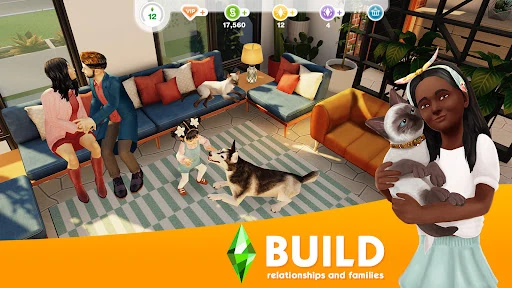
Analysis by Reviewed APKs
The Sims™ FreePlay is a life-simulation game about creating Sims, designing homes, and growing a town around them. It suits players who like shaping a little world over time, switching between decorating, relationships, careers, and hobbies. My overall take is that it offers plenty of room for personal stories, but its steady goal-driven rhythm and required network connection make it a better fit for planned check-ins than for entirely offline play.
A Town That Keeps Growing
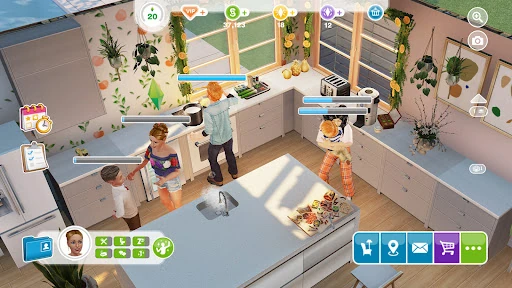
A typical session starts with checking what my Sims are doing and deciding which goals to tackle next. Completing goals earns Simoleons and rewards, which help me build out the town and make room for more Sims. From there, I might adjust a home, start a relationship, or send someone toward a career or hobby. The appeal is less about winning a match and more about nudging a community forward at my own pace.
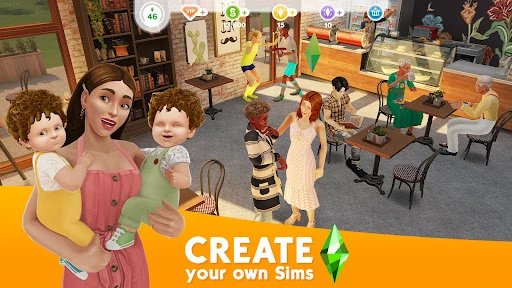
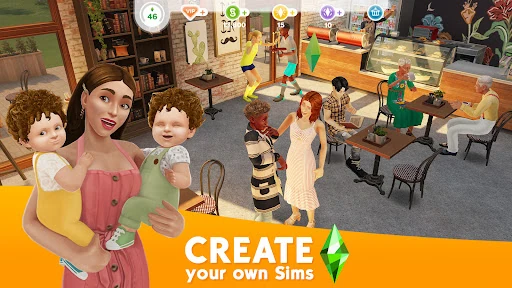
The creative side gives those goals a personal payoff. I can customize Sims from head to toe, arrange their homes, and choose how their lives unfold, from friendships and family to work and leisure. I like that a practical town-building decision can lead into a small character story. A new home is not just another building; it can become the backdrop for a family, a party, or whatever everyday drama I decide to set in motion.
More Life Sim Than Challenge
Compared with games built around fast rounds, combat, or tight reflexes, The Sims FreePlay is a much more relaxed kind of simulation. Its main attractions are creative control and a growing set of lives to manage. The description presents careers, hobbies, relationships, homes, and town expansion as connected parts of the experience, so there is more to do than simply decorate. It is a broad life-sim sandbox, guided by goals rather than a single competitive objective.
That breadth will not suit everyone. If I want a quick game with a clear finish line, or an entirely self-contained experience that never asks me to check in again, this is not that. The game requires a network connection, and progress is framed around completing goals and developing Sims over time. I would choose it for tinkering with a world and making stories, not for a short burst of action or a tightly scripted narrative.
Good Habits for Early Play
In the first hours, I would focus on learning how goals, Simoleons, and rewards connect before spreading attention across every available idea. Goals provide a clear direction while the town is small, and the money and rewards they offer help support expansion. It is tempting to spend the opening stretch imagining elaborate homes, but taking time to understand the progression gives those design choices a firmer footing.
I would also try more than one part of the simulation early on. Build a home, explore a career, and see how a hobby or relationship changes the feel of a Sim’s day. The game supports many different kinds of stories, so testing a few options is a useful way to find what keeps me interested. Keep the required network connection in mind, too, and make sure the game has enough storage available before settling into a longer session.
More From Our News Desk

Zoom Meetings, Google Meet, or Teams: Which Is Easiest to Join?

How I Build a Free Streaming Lineup With Tubi

Why Crunchyroll Is the Default Anime App for So Many Fans

YouTube TV: A Practical Guide to Cutting Cable

Rummikub and the Small Comfort of Phone Games

TeamViewer Remote Control or AnyDesk for Helping Family?
Who Will Find a Home Here
I would recommend The Sims FreePlay to players who enjoy casual management, decorating, and making up stories for a cast of characters. It is especially appealing if you like variety in a life sim: one session can center on a home, another on work or hobbies, and another on relationships. The ability to shape a town and its residents gives creative players plenty of personal choices to make as the community grows.
Players who prefer quick action, a fixed plot, or games that work without a connection may bounce off. The range of systems also means it is better approached as an ongoing project than as a one-and-done story. If you enjoy checking in on a simulated community, choosing your own priorities, and watching a town take shape, the steady pace can be a strength. If you mainly want immediate thrills, it may feel too gradual.
The Sims™ FreePlay is a free simulation game from ELECTRONIC ARTS. On Google Play, it has over 10 million installs and a 4.4-star rating from around 1.03 million ratings. It is rated Teen. The game was released on February 14, 2012, and the current version shown is 118.1.284528.
The game contains ads and offers optional in-app purchases, with listed items ranging from $0.99 to $99.99 each. Its description says it requires 1.8 GB of total storage and a network connection to play. The Android version requirement is not included in the available store figures, so check Google Play for current device compatibility.
Building a Life One Choice at a Time
Finding Your Feet
The opening is easiest to approach as a guided introduction to the game’s connected systems. Goals offer a reason to earn Simoleons and collect rewards, while town growth gives those resources a practical purpose. I found that framing useful: rather than treating building, careers, and relationships as separate menus of possibilities, I can think of them as different ways to develop the same community.
There is a lot of creative scope in the premise, so a new player may want to do everything at once. I would resist that urge at first. Try the core loop of completing goals and building the town, then branch out into hobbies, family life, or career development. That approach makes the early choices feel more manageable without giving up the game’s central pleasure: deciding what kind of lives these Sims will lead.
Progress With a Purpose
Progression has a clear link between activity and reward. Goals pay out Simoleons and other rewards, while working at careers helps Sims learn skills and raise their salaries. Those earnings feed back into the wider town and its possibilities. I like that the game gives everyday activities a longer-term purpose, even when the individual task is modest. It makes a career or hobby feel connected to the future shape of the community.
The pace is oriented toward ongoing development rather than a dramatic sprint to an ending. As the town expands and more Sims join it, there are more lives and spaces to think about. That can be satisfying if I enjoy gradual progress, but it also asks for patience. I would not recommend approaching it as a race. It is more rewarding when I pick a few priorities and let the town develop through them.
A Broad Set of Stories
The range of supported activities is a major part of the game’s identity. Sims can pursue different careers, with the description specifically mentioning following their days at the Police Station, Movie Studio, and Hospital. Hobbies include cooking, fashion design, salsa dancing, and puppy training. These options help give residents individual routines, rather than making the whole experience only about placing furniture and expanding lots.
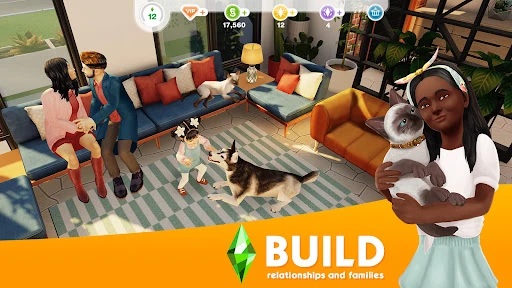
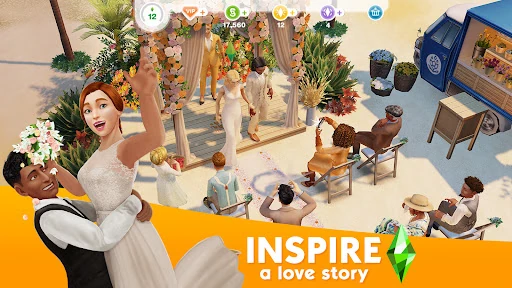
Relationships add another layer of player-directed storytelling. Sims can start friendships or romances, get married, have families, and care for pets. The description also highlights room for conflict and awkward choices, such as a rejected proposal or family members who do not get along. I appreciate that it makes space for both cosy domestic scenes and messier drama, letting players choose the tone rather than prescribing one ideal life.
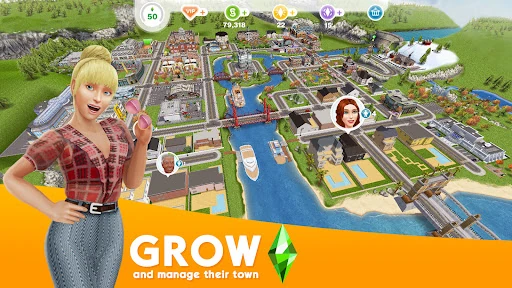
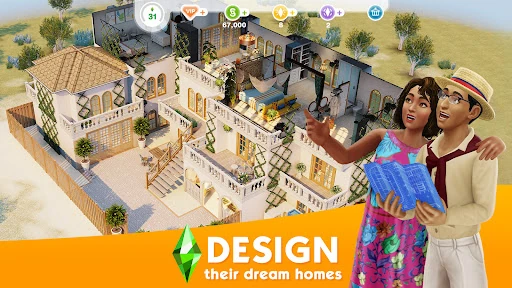
Customization reaches from Sim appearance to home design, including pools, multiple floors, and decor. The town can grow to include places such as a pet store, car dealership, shopping mall, and private villa beach. Players can also visit real friends’ Sim Towns and compare design choices. Together, these features give the sandbox more variety than a single-house decorating game, while keeping creative expression at the center.
Spending and Fairness
The game is free to play, but optional purchases of virtual currency and items are part of the experience. Google Play lists in-app items from $0.99 to $99.99, a wide range that makes it worth being deliberate about spending. The description also notes that some items can be a random selection of virtual items. I would treat purchases as optional extras, not as a requirement for enjoying the basic idea of building a town and shaping Sims.
Advertising appears in the game, so players should expect ads as part of the free experience. I cannot call the overall balance fair or unfair based on the presence of purchases alone; what matters to an individual player is whether the available pace and choices feel satisfying without paying. For households where accidental purchases are a concern, the description says in-app purchasing can be disabled in device settings.
A Few Practical Limits
The most important practical limit is connectivity: a network connection is required to play. That makes this a poor choice for a commute or trip where access is unreliable, and it rules out treating it as an offline fallback. Visiting friends’ Sim Towns is an explicitly social feature, but even ordinary play needs a connection, so I would plan around that before starting.
Storage is another consideration. The game description says it requires 1.8 GB total storage, which is worth checking before installation, especially on a device that is already crowded. The store facts do not provide a minimum Android version, so compatibility is best checked on Google Play for the particular device. Those practical details matter more here than any assumed performance claim.
Finally, the game’s open-ended range of activities can feel like a lot if I prefer a concise campaign with a defined finish. There are homes to customize, Sims to develop, and a town to expand, with goals providing direction along the way. That is appealing when I want a hobby game to return to, but less compelling if I want every session to deliver a major, immediate payoff.
The Sims FreePlay works best as a flexible life-simulation sandbox: part town builder, part home-design project, and part story generator. I like the way careers, hobbies, relationships, and customization give me several different reasons to return to the same growing community. The trade-offs are real, especially the required connection, ads, and optional purchases, but they do not erase the creative appeal.
I recommend it to patient players who enjoy setting their own goals and checking in on a simulated world. It is less suitable if you need offline play or want fast, tightly structured action. If building a town around the lives you invent sounds satisfying, The Sims FreePlay is an easy one to try for free.
The Sims™ FreePlay Frequently Asked Questions
Is The Sims FreePlay free to play?
Yes. The Sims FreePlay is free on Google Play, and its description says it is free to play. The game contains ads and offers optional purchases, so free access does not mean the experience is ad-free or that every virtual item is included without payment.
What in-app purchases does The Sims FreePlay have?
The game offers optional purchases of virtual currency and items. Google Play lists in-app items from $0.99 to $99.99 each, and the description says purchases can include a random selection of virtual items. It also says in-app purchasing can be disabled in device settings.
Can I play The Sims FreePlay offline?
No. The game description says a network connection is required to play. Visiting friends’ Sim Towns is one of its social features, but the connection requirement applies to playing generally, so it is not a suitable offline game for places without reliable access.
What devices and storage does The Sims FreePlay need?
The Sims FreePlay is available on Google Play for Android devices. Its description says it requires 1.8 GB total storage. The Android version requirement can vary with current compatibility details, so check the Google Play page on the device you plan to use.
Is The Sims FreePlay suitable for children?
Google Play rates The Sims FreePlay Teen. The game includes relationships, family life, and the option to create interpersonal drama, as well as ads and optional in-app purchases. Parents can review the current store information and decide whether those elements suit the player.
Pros
- Combines town building, home design, careers, hobbies, and relationships in one life-simulation sandbox.
- Offers lots of ways to customize Sims and develop their homes and community.
- Player-directed stories can include friendship, family, romance, pets, and conflict.
- Free to play, with goals and rewards giving town growth a clear direction.
Cons
- Requires a network connection, so it cannot serve as an offline game.
- Contains ads and optional in-app purchases, including items with a wide price range.
- Its gradual, open-ended pace may not suit players seeking quick action or a defined ending.
- Category
- Simulation
- Version
- 118.1.284528